
Episode Revisit: Are Non-Alcoholic Wines really that Bad?
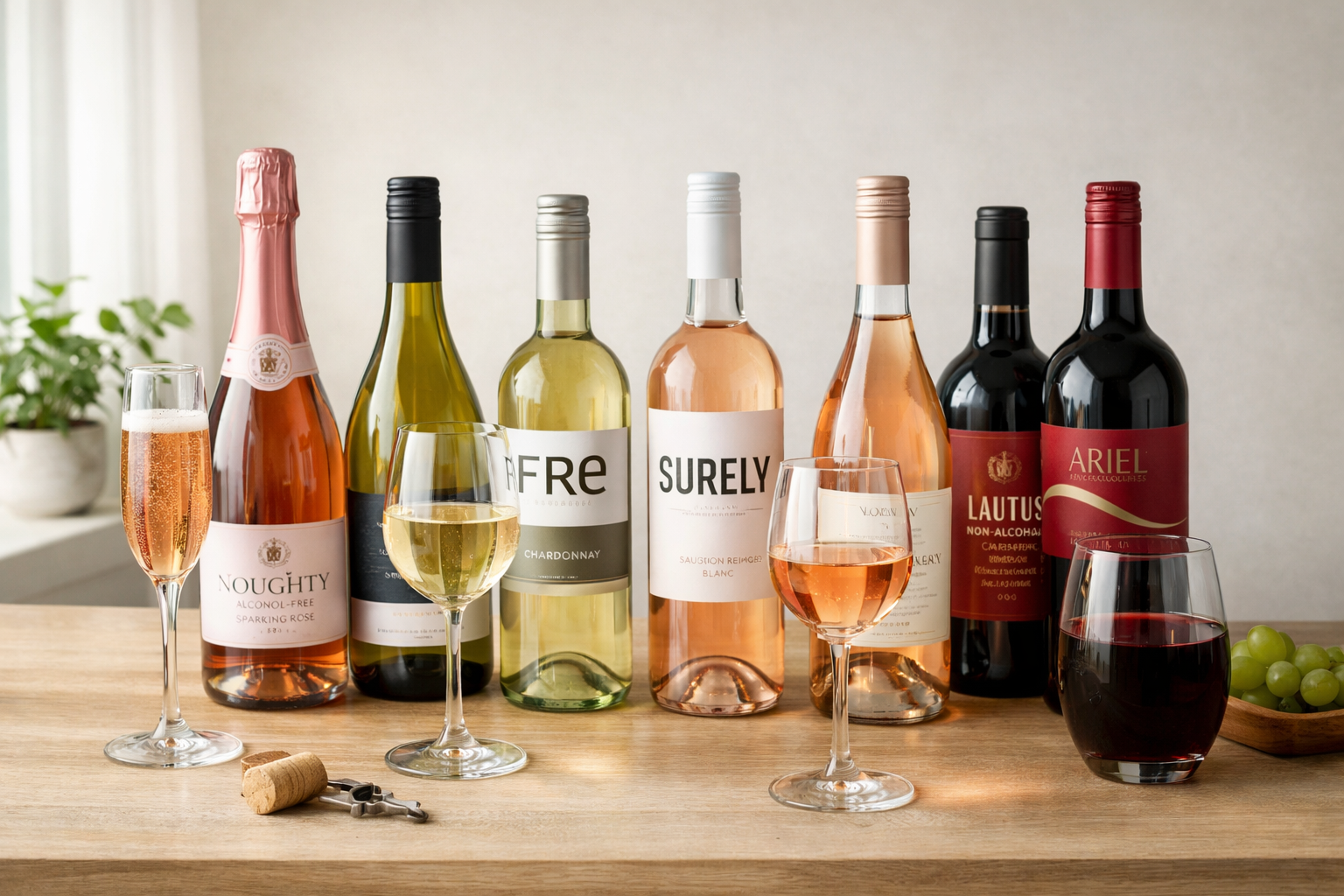
Dry January, Damp January, or Just Asking Better Questions
January has a way of making us reflect—especially when it comes to our relationship with alcohol. Whether you’re going fully dry, choosing a “damp” January, or simply drinking with more intention, the conversation around non-alcoholic wine is impossible to ignore.
After reading a recent San Francisco Chronicle article questioning whether non-alcoholic wine has actually improved, I decided to revisit a tasting we recorded last year—one that feels just as relevant now as it did then. The short answer? Progress is happening, but expectations matter.
What Is Non-Alcoholic Wine, Really?
Non-alcoholic wine isn’t just grape juice (most of the time). These wines are typically made like traditional wine—fermented with yeast—before the alcohol is removed through methods like reverse osmosis or spinning cone columns.
Dr. Hobie Wedler, who joined us for the tasting, explains why this process is so tricky: alcohol plays a huge role in wine’s texture, aroma, and structure. Remove it, and you risk losing some of the very things wine lovers cherish most.
The Tasting: Sparkling, Rosé, White, and Red
We gathered around the kitchen table with several bottles spanning styles and regions—from California rosé bubbles to New Zealand Sauvignon Blanc to de-alcoholized Cabernet Sauvignon.
Some wines leaned heavily into fruit and sweetness. Others surprised us with acidity, structure, and even a touch of tannin. A few were better thought of as their own category rather than substitutes for traditional wine.
One clear takeaway? Sauvignon Blanc seems to handle de-alcoholization better than most varieties, thanks to its naturally aromatic profile. Reds, on the other hand, are still the biggest challenge.
Can Non-Alcoholic Wine Replace Wine?
If you love wine for its layers, evolution, and food-pairing magic, non-alcoholic wine probably won’t fully replace that experience—at least not yet. But if what you miss most is the ritual of pouring a glass while cooking, gathering with friends, or participating in the moment, these wines can absolutely fill a role.
Several bottles shined as bases for mocktails or casual sipping, especially when we stopped asking them to behave like traditional wine.
Final Thoughts
Every bottle we tasted was drinkable. Some were genuinely enjoyable. And all of them were better than we expected.
Non-alcoholic wine is a fast-growing category, and while it’s not a one-to-one substitute for wine, it is carving out its own space. The key is managing expectations—and staying curious.
If you’ve tried non-alcoholic wines, I’d love to hear what you think. Are you dry, damp, or somewhere in between this January?
Sip well,
Nikki 🍷