
Chardonn-YAY or Nay? Three Generations Weigh In…
Yuck to Yum: A 3-Generation Blind Chardonnay Tasting (and Why the Grape Is So Polarizing)
New Year, New Grape Energy
If you’ve ever said “ABC… anything but Chardonnay,” you are not alone. Chardonnay is one of the most polarizing wines out there—people tend to love it or hate it, with very little middle ground.
This episode of Sip With Nikki started the way many wine debates do: with a casual comment that turned into a full-on investigation. While packing a “wine suitcase” for Nikki’s annual trip home to New Jersey (which, yes, later becomes the perfect vessel for three dozen vacuum-sealed Jersey bagels), her mom Susan dropped a bomb:
“I think I like Chardonnay now.”
Naturally, Nikki—winemaker, wine educator, and professional wine detective—decided to unpack that statement properly.
Why Chardonnay Can Taste Like Six Different Grapes
Chardonnay is often called “the winemaker’s grape” because it starts out fairly neutral—then winemaking choices can dramatically reshape it. Where it grows, when it’s picked, what it’s fermented in, whether it goes through secondary fermentation, and how (or if) it’s aged in oak… all of it matters a lot.
That’s why one Chardonnay can taste like lemon zest and grapefruit, and another can taste like toasted marshmallow, popcorn butter, or even (as one taster described) “lighter fluid.” Same grape. Totally different outcomes.
And that’s where the confusion—and the strong opinions—come from.
The Tasting Lineup: Three Generations, Six Wines, One Blind Experiment
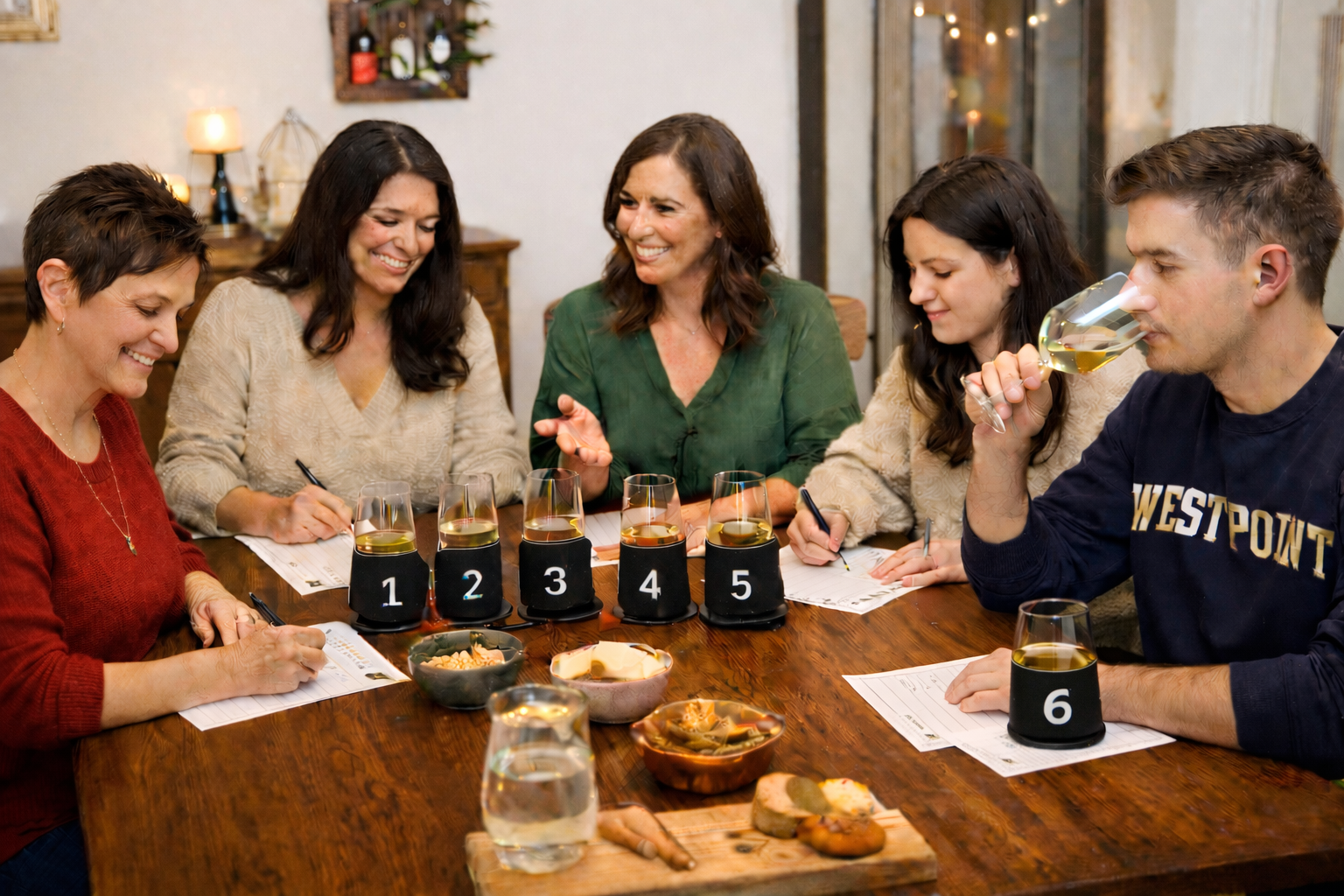
To really show the range, Nikki gathered a three-generation panel and blind tasted six Chardonnays ranging from $15 to $70. The group included:
Nikki (Gen X) – your host, guiding the tasting
Susan (Baby Boomer) – longtime wine drinker with strong preferences
Dana (Gen X) – Nikki’s sister
Aidan (Gen Z) – West Point cadet, bourbon-leaning palate
Lauren (Gen Z) – tasting Chardonnay for the first time
The goal wasn’t to crown a single “best Chardonnay.” It was to discover what styles each person actually liked—and why.
A Simple Tasting Tool You’ll Actually Use: F.E.W.
To help everyone capture what they were experiencing, Nikki introduced a simple acronym:
F.E.W.
F = Fruit (what fruit notes show up?)
E = Earth (herbal, mineral, floral, savory, “non-fruit” aromas)
W = Wood (oak, baking spice, vanilla, toast, barrel notes)
Even better, Nikki encouraged the group to think of the letters as big and bold or small and subtle. Some wines screamed W (hello, butter bomb). Others were all F, with barely a whisper of oak.
This simple framework helped everyone do something most people don’t realize they can do: describe wine preferences in a way that actually helps you order smarter at restaurants.
The “Butter” Mystery: What’s Really Happening?
One of the biggest aha moments came when Nikki explained why certain Chardonnays taste creamy, round, and buttery.
It’s not “Chardonnay flavor”—it’s often a winemaking choice called malolactic fermentation, a secondary fermentation that converts sharp malic acid (think tart green apple) into softer lactic acid (think creamy texture).
This process also creates diacetyl, the same compound used to make movie-popcorn butter flavoring. So when someone says, “This tastes like popcorn butter,” they’re not imagining it—they’re tasting a real chemical signature.
The Reveal: What They Actually Drank
The lineup turned into a masterclass in Chardonnay range:
Wine #1: J. Lohr “Unoaked” Chardonnay (California) — bright, citrusy, stainless-steel freshness
Wine #2: Dreaming Tree Chardonnay (Central Coast, CA) — classic buttery, oak-driven style at an approachable price
Wine #3: Louis Jadot Mâcon-Villages Chardonnay (Burgundy, France) — subtle, restrained Old World elegance
Wine #4: Rombauer Chardonnay (Napa Valley) — bold, buttery, oak-forward and unapologetic
Wine #5: Pride Mountain Vineyards Chardonnay — balanced, layered, and refined
Wine #6: Three Sticks Chardonnay (Sonoma Coast) — vibrant, complex, and constantly evolving in the glass
The key takeaway? Even with the same grape, favorites varied wildly—and every preference made sense once the style was understood.
What This Means for You Next Time You Order Chardonnay
If you’ve sworn off Chardonnay because of one overly buttery glass years ago, this episode is your permission slip to try again—with intention.
Instead of saying “I hate Chardonnay,” try:
“I want something fruity and not oaky.”
“I like lean, crisp, high-acid whites.”
“I like round, creamy, oak-aged wines.”
“I want something balanced, not extreme.”
Those few words can completely change what lands in your glass.